MetaMask swap is a wallet-native route aggregator for token trades
Metamask swap is a wallet-native route aggregator that lets a self-custody user exchange tokens from inside the MetaMask wallet while comparing available liquidity routes, network costs, price impact, and transaction controls. It is built for users who want a direct onchain swap without leaving the wallet interface, copying addresses between apps, or handing asset custody to a centralized exchange.
The feature matters because token trading inside a wallet has different failure points from account-based exchange trading. The user signs a blockchain transaction, pays gas in the network's native asset, and receives the purchased token directly in the same wallet address. That makes the quote preview, approval step, slippage setting, and final confirmation screen central parts of the experience.
Token routing happens before the signature
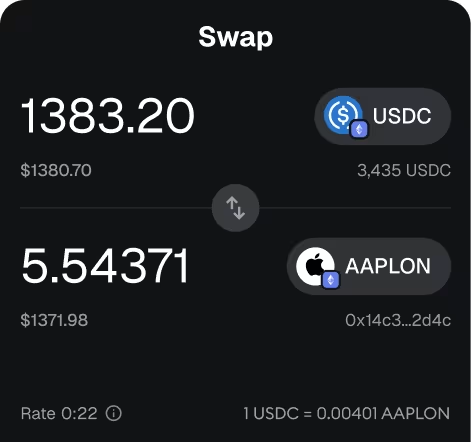
Before a transaction reaches the chain, MetaMask searches available swap paths and presents a quote. A route might use a direct pool, split liquidity through several pools, or pass through an aggregator that already checks decentralized exchange venues. The user sees the token being sold, the token being received, the estimated output, the network fee, and the tolerance for price movement before signing.
This pre-signature step is the main advantage of Metamask swap over opening a random exchange page and hoping the route is competitive. The wallet already knows the active account and network, so the trade flow starts from the user's actual balance rather than from a blank trading screen. If the token requires an allowance, the wallet prompts for approval before the swap transaction itself.
Where the wallet context changes the trade
A wallet-native swap is tied to the selected network. ETH on Ethereum, USDC on Base, POL on Polygon, BNB on BNB Smart Chain, and similar assets live on separate ledgers even when the ticker looks familiar. The selected account holds balances on each network independently, so a token on one chain does not automatically fund a trade on another chain.
That distinction explains many failed attempts by new users. A swap changes one token into another on the same network. Moving value between Ethereum, Arbitrum, Optimism, Base, Polygon, BNB Smart Chain, Avalanche, Linea, or Solana requires the relevant network support and, when crossing chains, a bridge or transfer path rather than a normal same-chain swap. Metamask swap is best understood as an exchange tool inside the wallet, not as a universal bridge for every asset.
Gas, quotes, and the cost shown in the preview
The visible price is only one part of an onchain trade. The transaction also requires gas, paid in the native asset of the active network: ETH on Ethereum and several Layer 2 networks, POL on Polygon, BNB on BNB Smart Chain, AVAX on Avalanche, and SOL on Solana. Without enough native gas token, the wallet cannot send the transaction even when the token being sold has a sufficient balance.
Metamask swap includes the network fee estimate in the preview, along with the expected receive amount. On busy networks, gas changes quickly because block space is being auctioned in real time. A small trade on Ethereum loses more to fixed transaction cost than the same trade on a lower-cost network, while a large trade needs closer attention to price impact and available liquidity.
Slippage settings decide how much price movement the trade accepts
Slippage is the gap between the quoted output and the minimum output the transaction accepts when it lands onchain. A tight setting protects against receiving far less than expected, but it rejects more transactions when the market moves. A loose setting gives the transaction more room to execute, but it also accepts a worse fill.
That control matters most with newly launched tokens, thin liquidity pools, and volatile markets. Stablecoin pairs such as USDC to DAI need less tolerance because their prices track closely. Meme tokens and small-cap assets need extra scrutiny because a single trade changes the pool price. The preview exists to make that tradeoff visible before the wallet asks for a signature.
The approval step is separate from the swap
ERC-20 style tokens use allowances, so a wallet first grants a smart contract permission to move a specific token before the contract performs the trade. That approval is its own onchain action and consumes gas. After approval, the user still signs the swap transaction that performs the exchange.
This two-step pattern is normal across DeFi, but it surprises users who expect one click. Reading the approval prompt matters because it states which asset is being authorized. Many experienced users limit approvals to the needed amount when the interface allows it, especially for tokens they do not plan to trade again. Metamask swap places those prompts inside the familiar wallet confirmation flow.
A first swap from ETH to USDC
A straightforward workflow starts with the account, network, and gas token. The user selects Ethereum or a supported Layer 2, chooses ETH as the asset to sell, chooses USDC as the asset to receive, enters an amount, and reviews the quote. The receive amount, estimated gas, slippage setting, and final confirmation all appear before the transaction is signed.
- Confirm the active network matches the token balance being sold.
- Keep enough native gas token after entering the trade amount.
- Check whether the quote uses the intended token contract.
- Review the minimum received amount, not only the headline estimate.
- Wait for the transaction status before starting a replacement trade.
Once the swap confirms, the new token balance appears in the wallet on that network. If the token is not visible, importing the token display shows the balance associated with the same address; it does not move funds or change custody.
Security signals built into the wallet flow
More broadly, MetaMask's broader wallet experience includes security alerts, transaction detail screens, and protective checks designed to make risky actions easier to notice. Those signals belong in the swap flow because a token trade is still a smart contract interaction. The wallet shows the address, permissions, estimated balance changes, and requested signature before the transaction leaves the user's device.
A specific caution belongs here: random tokens sent to a wallet are not an invitation to trade. Scam tokens use names, logos, and fake value displays to lure users into unsafe approvals. When a balance appears without the user buying or receiving it from a known party, the safer action is to ignore it rather than chase a quoted price.
When a direct exchange is the better tool
Centralized exchanges still suit fiat onboarding, account recovery, limit orders, tax exports, and high-liquidity trades in assets such as BTC, ETH, SOL, and major stablecoins. Wallet swapping suits a different job: keeping custody while moving between onchain tokens, interacting with DeFi positions, preparing NFT purchases, or rebalancing assets across a Web3 account.
Uniswap, 1inch, Matcha, PancakeSwap, and similar venues remain important parts of the broader routing landscape. The difference with Metamask swap is that the wallet becomes the starting point. The user does not need to connect to a separate trading site first, and the route preview appears beside the same account controls used for sending, receiving, buying, selling, and managing assets.
How it fits with MetaMask's broader product set
Day to day, MetaMask has grown from an Ethereum wallet into a wider onchain interface that includes buying crypto, selling crypto, swaps, portfolio views, NFT activity, dapp connections, and developer infrastructure. The swap feature belongs to that practical middle layer: it is not a portfolio tracker by itself, and it is not a market-making protocol. It is the transaction path that converts one wallet-held token into another.
That role makes it useful for ordinary wallet maintenance. A user might swap ETH to USDC before paying from a stable balance, trade USDC to an ecosystem token before using a dapp, or convert leftover assets back into the gas token needed for future transactions. Metamask swap keeps those actions close to the account that signs them.
Common trade failures and what they mean
Failed swaps usually come from four causes: insufficient gas, price movement beyond the slippage limit, token transfer restrictions, or a congested network that leaves the transaction pending too long. A failure still consumes gas when the transaction reaches the chain and executes unsuccessfully, because validators processed the attempted operation.
There is no magic refund for gas on a failed onchain transaction. The useful response is to inspect the failure reason, adjust the amount or slippage only when the quote justifies it, and confirm that the token is tradeable on the selected network. When the issue is simply gas, adding the correct native asset solves the blocker. When liquidity is thin, a smaller trade or a different route gives a cleaner execution path.
Metamask swap questions worth asking
Does MetaMask custody my tokens during a swap?
MetaMask does not take account custody in the way a centralized exchange account does. The assets remain controlled by the wallet address, and the user signs the approval and swap transactions from that account. The trade still interacts with smart contracts and liquidity sources, so the confirmation screen and permission request matter before the transaction is submitted.
Can I use Metamask swap for Bitcoin or Solana assets?
MetaMask supports a wider set of assets and networks than its original Ethereum-only history, but swap availability follows the wallet's current network and token support. Bitcoin exposure inside wallet products differs from swapping an Ethereum-style token, and Solana activity uses Solana-compatible transaction rules. The practical check is the active network, displayed balance, and quote screen for the asset pair.
How long does a wallet swap take to confirm?
Confirmation time follows the network that processes the transaction. A Layer 2 trade normally settles faster and cheaper than a busy Ethereum mainnet transaction, while a congested chain delays inclusion until the gas price is competitive. The wallet shows pending status after signing, and the received token balance updates once the transaction confirms on the selected network.
Do I need ETH to swap every token in MetaMask?
You need the native gas token for the network you are using, not always ETH. Ethereum and many Ethereum Layer 2 networks use ETH for gas, Polygon uses POL, BNB Smart Chain uses BNB, Avalanche uses AVAX, and Solana uses SOL. The token being sold does not replace the network's gas requirement unless the chain supports a specific alternative gas flow.
What happens if the quoted amount changes before I confirm?
The quote refreshes as market prices, pool balances, and gas estimates change. If the final onchain price moves beyond the slippage tolerance, the transaction fails rather than accepting a worse output than allowed. That failure still spends gas if it reaches execution, so fast-moving or thinly traded tokens deserve a closer look at minimum received amount.
Which tokens should I avoid swapping from my wallet?
Avoid trading unsolicited tokens that appeared in the wallet without a known source. Scam tokens imitate real projects, display misleading values, and push users toward unsafe approvals. A legitimate swap starts from a token the user intentionally bought, received, bridged, or earned. Unknown dust balances are better left untouched than tested through a swap interface.
Is a MetaMask swap the same as bridging?
A swap exchanges one token for another on the selected network. Bridging moves value across networks, which involves different contracts, message passing, wrapped assets, or liquidity transfers. If a user has USDC on Ethereum and needs USDC on Base, that is a cross-network movement rather than a simple same-chain token trade.