MetaMask swap is a wallet-native route finder for token trades with Wallet Guard alerts
Metamask swap is a built-in exchange experience inside the MetaMask wallet that searches aggregated liquidity for token trades across major networks, shows rate and transaction details before signing, and adds Wallet Guard alerts to help users spot dangerous approvals. It is made for people who want to move from ETH to USDC, swap SOL, trade wrapped assets, or adjust a DeFi position without leaving their wallet screen.
The trade starts inside the wallet, not on a separate exchange screen
The distinctive part is the placement. A swap begins from the same wallet where assets, networks, dapp connections, NFTs, and transaction history already live. That keeps the workflow close to the account that signs the transaction. The user chooses the token being sold, selects the token being received, enters an amount, and reviews the quote before confirming through MetaMask.
That matters because token swaps are not just price comparisons. Every trade interacts with a chain, a token contract, a liquidity source, and a signing request. Keeping those pieces in the wallet makes the approval step easier to inspect. Users still see gas, slippage, route details, and receiving amounts before the transaction is sent.
How Metamask swap searches routes before you sign
Metamask swap uses aggregated services to look for available swap routes rather than relying on a single pool. A route can involve decentralized exchange liquidity, bridge-like routing on supported networks, or a path through an intermediate token when that produces a better received amount. The preview distills that search into the output token amount and the transaction data the wallet asks the user to approve.
The experience is designed around tokens that people already manage in MetaMask: ETH and ERC-20 assets on Ethereum, assets on Layer 2 networks, stablecoins such as USDC, and supported tokens on additional major networks including Solana through the broader wallet experience. Network support changes as the wallet adds products, but the core idea stays the same: the wallet presents a route for the account that holds the funds.
Gas, quotes, slippage, and the real cost of a swap
A quoted rate is only one part of the trade. The final cost also includes network gas, a service fee where shown, and any price movement between quote generation and settlement. On Ethereum, gas is paid in ETH. On Polygon, gas is paid in POL. On Solana, network fees are paid in SOL. Layer 2 networks use their own fee model, so the same token pair can feel very different across chains.
Slippage settings decide how much price movement the trade accepts before it fails. Tight slippage protects the quoted amount but rejects more transactions during fast markets. Wider slippage increases execution odds and also accepts a worse fill. Metamask swap exposes these controls because token liquidity varies by pair: swapping ETH to USDC is different from trading a newly issued meme token with thin liquidity.
Wallet Guard alerts belong in the approval step
Security alerts are most useful at the moment a signature appears. MetaMask highlights risk signals through built-in Wallet Guard alerts and related transaction protections, including warnings around suspicious activity, unsafe contracts, and approvals that deserve another look. This does not turn every trade into a security lecture; it puts the warning next to the action that spends, approves, or transfers value.
Approvals deserve special attention. Some tokens require an allowance before a swap contract can move them. A limited approval grants access to a specific amount, while a broader approval grants more flexibility and more exposure if the approved spender later becomes risky. A strong swap workflow makes the allowance visible before the signature is sent.
When the wallet swap workflow fits the job
This tool works best for common wallet-level trades: moving from ETH into a stablecoin, buying a governance token for a dapp, turning rewards into a preferred asset, or rebalancing between networks supported in the wallet. It also suits users who already connect MetaMask to DeFi apps and want a familiar signing flow for routine trades.
- Convert ETH, USDC, SOL, or other supported assets without opening a centralized exchange account.
- Adjust a position after receiving staking rewards, airdrops, NFT proceeds, or dapp payouts.
- Compare aggregated quotes before accepting a token route.
- Review gas, slippage, and approval details in the wallet interface.
- Use built-in alerts when a transaction or approval carries visible risk signals.
More broadly, Metamask swap is less suited to advanced order types such as limit orders, time-weighted execution, or professional chart trading. Those workflows belong in specialized exchange interfaces. A wallet swap focuses on immediate conversion from one onchain asset to another.
Getting started from a funded MetaMask account
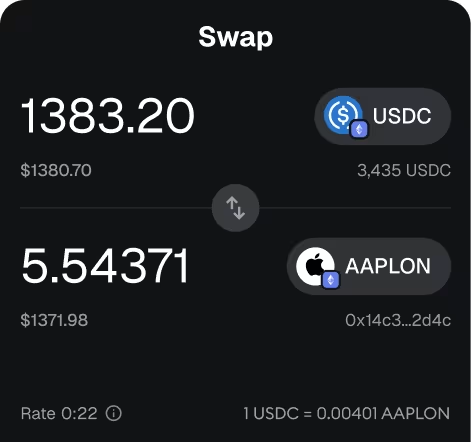
A new swap starts with a funded wallet and the correct network selected. The account needs the token being sold and enough native gas for the chain. After choosing the sell token and buy token, the quote screen shows the estimated amount received, route information where available, transaction fee, and any approval request. The user reviews those details before signing.
For a first trade, start with a small amount and a liquid pair such as ETH to USDC. That makes the mechanics clear: quote, approval if required, confirmation, pending transaction, and final balance update. Once the transaction settles, the wallet reflects the new token balance. If the token does not appear automatically, adding the token contract to the wallet view displays it.
MetaMask Swaps alongside Buy, Sell, Earn, and Perps
Day to day, MetaMask now presents swaps as one part of a larger wallet menu. The same product family includes buying crypto with cash, selling supported assets, earning through integrated opportunities, trading perpetuals, exploring real-world assets, managing dapp connections, and using developer services such as MetaMask Connect and embedded wallets. The swap feature remains the simplest onchain trading action inside that broader experience.
That larger context helps explain the design. A user who buys ETH, receives USDC, connects to a dapp, or collects an NFT eventually needs a way to change one asset into another. Metamask swap keeps that action close to the rest of the wallet instead of making token conversion feel like a separate application.
Risks that matter before approving a token trade
The main risks are visible before signing: the wrong network, the wrong token contract, excessive slippage, insufficient gas, and an approval that grants more access than intended. Look at the token symbol and contract details when trading unfamiliar assets, because fake tokens copy names and tickers. A swap preview is only useful when the account holder reads it closely enough to catch mismatches.
Market depth also matters. Thin liquidity creates larger price impact, especially on small-cap tokens. A displayed quote can expire, and the transaction can fail if the market moves outside the selected tolerance. Failed transactions still consume gas on many chains, so repeated retries during volatile periods become expensive.
Uniswap, 1inch, Jupiter, and centralized exchanges as alternatives
Alternatives solve different problems. Uniswap gives direct access to Ethereum and Layer 2 automated market maker pools. 1inch focuses on aggregation across decentralized liquidity sources. Jupiter is widely used for Solana routing. Centralized exchanges such as Coinbase and Kraken suit users who want order books, fiat rails, account statements, and customer account recovery.
The wallet route is strongest when the funds already sit in MetaMask and the trade is a direct onchain conversion. Moving assets to a centralized exchange adds deposits, withdrawals, and custody steps. Using a dedicated DEX interface adds more market-specific controls. Metamask swap sits between those choices: fast enough for routine wallet trades, detailed enough to review the transaction, and close to the account that signs it.
Questions people ask about Metamask swap
Which tokens are easiest to swap from a MetaMask wallet?
Highly liquid assets on supported networks are the easiest because routes are deeper and price impact stays lower. ETH, USDC, SOL, wrapped network assets, and major DeFi tokens usually produce clearer quotes than thinly traded tokens. New or obscure assets need extra review because copied names, limited liquidity, and aggressive approval requests create avoidable transaction risk.
Can hardware wallets be used with MetaMask swaps?
A hardware wallet connected to MetaMask can sign swap transactions from the account it controls. The wallet interface prepares the quote and transaction, while the hardware device confirms the final signing step. The important detail is reviewing the device prompt, especially the address and approval information, because the hardware wallet protects the key but still signs what the user accepts.
Why does the received amount change between the quote and confirmation?
The received amount changes when market prices, pool balances, gas conditions, or the selected route move before the transaction settles. Slippage tolerance defines the worst accepted execution range. If the market moves beyond that range, the transaction fails instead of completing at a worse price. Liquid pairs move less dramatically than small pools with low depth.
What fees show up before using the swap feature in MetaMask?
The preview shows the network fee required to send the transaction, the quoted amount received, and any service fee included in the route. Gas is paid with the native asset of the selected chain, such as ETH on Ethereum, SOL on Solana, and POL on Polygon. The final cost also reflects slippage and price impact for the token pair.